Behind the Cover: The Connection Between Emery and the Library of Shadows and Its Intricate Design
- Mikayla Young

- Jan 10
- 10 min read
In the world of literature, a book cover serves as the first point of contact between the reader and the story within. It holds the power to intrigue, captivate, and even provoke thought long before the pages are turned. When I created the cover for Emery and the Library of Shadows, my goal was to ensure that it not only drew attention but also encapsulated the essence of the narrative, the characters, and the enchanting world they inhabit. This post delves into the inspiration and creative journey behind the cover design, exploring how each element intricately ties back to the story and enhances the reading experience. Join me as I unpack the details that make this cover a visual gateway into the heart of the book.
The Spark Behind the Cover Design
Creating a book cover is a unique challenge for me, one that requires both artistic vision and a deep understanding of the narrative within the pages. It has to capture the essence of the story while inviting readers into a new world filled with intrigue and possibility. For my book, Emery and the Library of Shadows, the cover needed to reflect the mystery, magic, and adventure that define the novel, all while standing out on a shelf crowded with other books vying for attention.
Initially, I considered the option of hiring a professional cover artist or designer for this project. However, I faced two significant barriers: first, the financial aspect, as I simply did not have the funds to invest in such services at that time. More importantly, I felt a strong desire to challenge myself creatively and to forge a personal connection to the cover design process. I wanted to create the cover myself, believing that this would deepen my relationship with the story and the finished product I was preparing to share with the world. Was this a terrifying and daunting process? Absolutely. It was daunting not because I was unwilling to tackle it, but rather because I was anxious that the end result might not align with my hopes and expectations. Thankfully, after much effort and dedication, the cover design turned out to be exactly what I had envisioned. It emerged vibrant, imbued with a sense of magic, and most importantly, it bore the unmistakable mark of being hand-drawn—something that is becoming increasingly rare in the world of book cover designs, which often lean heavily on digital art.
My intention was to ensure that the cover was not only visually appealing but also deeply connected to the story itself, functioning as a portal that invites readers into the narrative without being overly extravagant. The creative process began with a clear vision: the cover should evoke the feeling of stepping into the library itself, a mystical space filled with secrets waiting to be uncovered. With this idea in mind, I began sketching a bookshelf lined with books of varying sizes, an homage to both the library and the reader's bookshelf. To further tie the cover to the story, I incorporated flames around the edges of the design, creating a fiery border that seemed to suggest that the burning flames were encroaching upon the stories nestled within the shelves. This element serves as a visual metaphor for the tension and urgency present in the narrative.
Additionally, I drew vines weaving through the shelves, which connect to a specific scene in the story. I must admit that the vines appear darker on the printed cover than I intended, and I plan to use a lighter green in future illustrations to achieve the desired effect. The centerpiece of the design was intentionally left blank for a reason; I added a red post-it note to signify the crucial book that leads Emery to uncover the mysteries surrounding the Blackwood family and the tragic events that culminated in the library fire of 1972, which claimed the lives of Arthur and several patrons. This detail adds a layer of intrigue and invites readers to delve deeper into the narrative.
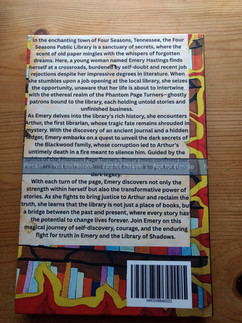
The cover design is thoughtfully showcased on both the front and back to create a cohesive and interconnected visual experience. The back cover mirrors the front but features an additional element: a piece of old, burned paper that I designed to house the book synopsis. This choice not only reinforces the theme of the library fire but also adds a tactile quality to the overall design. After I completed the drawing and coloring process using pencils, Sharpies, and markers, I took a high-quality photograph of the artwork and uploaded it to the Canva App. There, I added the red post-it note on the front cover, which prominently displays the book's title, as well as the flamed paper page on the back to hold the synopsis, along with a sleek black spine that features both the title and the series name.
Once I formatted the cover to meet Amazon KDP's specific dimensions based on the book's size and page count, I uploaded it to my author account. To my astonishment, the cover and manuscript were approved instantly—a first in my self-publishing journey! This moment filled me with a sense of accomplishment and relief. I then eagerly awaited the arrival of my proof copies. When they finally arrived on January 7, 2026, I was thrilled to see that both the paperback and hardcover versions turned out beautifully. The covers were vibrant, with colors that truly popped, and it was evident that the artwork was hand-drawn. My vision had come to life just as I had hoped, and I couldn't contain my excitement. I did a mini happy dance when I first laid eyes on them, filled with pride not only for the way they turned out but also for the fact that I had created them myself.


The Connection Between Cover Details and Story Elements
Below I break down each detail within the cover and how it connects to the story, providing a deeper understanding of the intricate relationships between the visual elements and the narrative they represent.
The Bookshelf:
The bookshelf featured prominently on the cover serves as a profound symbol, representing not only the physical space of the Four Seasons Library, where much of the narrative unfolds, but also the metaphorical shelves of readers' own lives. It reflects how bookshelves are repositories of stories, memories, and interests, acting as a mirror to the patrons' desires and curiosities. The choice of a rich brown color for the bookshelves is particularly significant; it evokes the warmth and familiarity of a beloved library while also hinting at a specific, pivotal scene within the story—the entrance to the forbidden section of the library. This door, crafted from dark wood and adorned with intricately carved vines, symbolizes not just a literal barrier but also the secrets and hidden narratives that await discovery, inviting readers to ponder what lies beyond the surface.
The Books:
The various books depicted on the cover encapsulate the multitude of stories yearning to be discovered within the library's walls. Each book is a vessel of narrative, representing not only the diverse genres available but also the unique experiences and connections each reader forges with these tales. The vibrant colors of the books are not merely decorative; they serve to signify the spectrum of themes woven throughout the story—sorrow, connection, hope, anger, mystery, grief, and loss. This kaleidoscope of colors invites readers to explore the emotional landscape of the narrative, suggesting that every book holds a different journey, waiting to resonate with the individual reader's own experiences and emotions.
The Flames:
The flames illustrated on the cover are emblematic of the catastrophic event that lies at the heart of the story—the Four Seasons Library fire of 1972, which profoundly impacts the characters and their narratives. The outer yellow flames symbolize hope and resilience, representing the light that flickers amidst the chaos, illuminating the bravery of those trapped within the inferno, be they people or books. In stark contrast, the reddish-orange flames convey the transformation of hope into terror, capturing the moment when safety is shattered and fear takes hold. These flames evoke the intense emotions experienced by the community, from the anguish of loss to the confusion and anger that arise in the aftermath. The black flames introduce an element of mystery and foreboding, symbolizing the dark shadows of uncertainty surrounding the fire's origins and the obstacles that Emery must navigate in her pursuit of the truth.
The Vines:
The vines that entwine the bookshelves on the cover serve a dual purpose. They symbolize the growth and development of the characters within the narrative, illustrating their journeys toward understanding and resolution. Simultaneously, the vines represent the constraints faced by the phantom page turners, who find themselves trapped in their own stories, yearning for a voice until Emery arrives to help them share their truths. Moreover, the vines are a poignant reminder of the oppressive grip that the villainous Blackwood family exerts over the residents of Four Seasons, illustrating how their influence stifles growth and freedom.
The Purple Flower: The striking purple flower on the cover signifies the potential for blooming and growth inherent in the stories we read and tell. This flower symbolizes hope and renewal, suggesting that even in the darkest of circumstances, beauty can emerge. Additionally, the flower hints at a significant object that Emery uncovers during her quest for the truth behind the library fire, representing the intertwining of discovery and personal growth as she navigates the complexities of her investigation.
The Center Red Post-It/Book:
The central red post-it note on the cover is a crucial element, representing the ledger book that Emery discovers. This book serves as a key that unlocks numerous significant clues regarding the cause of the library fire and the enigmatic Blackwood family, as well as Arthur's own story. The vivid red of the post-it note, combined with the yellow text, echoes the fiery colors that border the cover design, reinforcing the connection between the clues Emery uncovers and the overarching themes of fire and revelation that permeate the narrative.
The Black Spine:
The black spine of the book is a powerful representation of the lurking shadows and unseen forces within the story that seek to thwart Emery's efforts to reveal the truth and share Arthur's narrative. This spine serves as a reminder of the obstacles that stand in the way of understanding and justice, embodying the tension that drives the plot forward as Emery confronts the darkness that seeks to silence the stories of the past.
The Old Style Flame Torched Paper on the Back Cover:
The old-style flame-torched paper featured on the back cover serves as a poignant connection between the past and the present throughout the narrative. It symbolizes the enduring tradition of recording stories, emphasizing how journaling and documentation can illuminate the lessons of history, much like Emery's journey to uncover Arthur's tale from 1972. The flame-torched style evokes the destructive nature of the fire that sought to obliterate Arthur's story, serving as a powerful reminder of the fragility of memories and the importance of preserving them for future generations.
The Impact of the Cover on Readers
Readers often share how a cover influenced their decision to read a book, and this influence can be profound and multifaceted. Many readers mention being irresistibly drawn in by a book's vibrant or dark colors, which evoke specific emotions and set the tone for the narrative within. A stunning design can capture the imagination, while a more simplistic approach might intrigue a reader's curiosity, prompting them to ponder the story's depth. The presence of character art on the cover can create an immediate connection to the protagonists, allowing readers to envision themselves within the story's world. Ultimately, the cover serves as a visual invitation, sparking curiosity and setting expectations about the themes and style of the book. It becomes a memorable image that readers associate with the story long after finishing the book, often lingering in their minds as a symbol of the journey they undertook through its pages.
In the case of "Emery and the Library of Shadows," I recognize that the cover may not resonate equally with all potential readers. Some may glance at it and feel an immediate attraction, while others may overlook its appeal. This divergence in perception is entirely acceptable and reflects the diverse tastes and preferences among readers. Certain individuals might appreciate the hand-drawn aspect of the cover, finding beauty in its imperfections and the unique touch it adds to the overall presentation. Conversely, there will be those who might be put off by this artistic choice, preferring a more polished or conventional design. This variance in opinion is a natural part of the reading experience, and it is important to embrace the fact that not every cover will connect with every reader.
As an author, I fully recognize and accept the fact that I may not be the most skilled artist in the traditional sense of the word. I am acutely aware that my cover design may not resonate with everyone who sees it, and that is perfectly okay. My intention for this cover was not to create a strikingly beautiful image that captures the eye at first glance, nor was it to follow the latest trends in cover design that might appeal to a broader audience. Instead, my focus was on crafting a cover that genuinely reflects the themes and emotions woven throughout the story it represents.
The essence of my design lies in its ability to connect with readers on a deeper level, to evoke a sense of curiosity and intrigue that aligns with the narrative before they even turn the first page. I sincerely hope that when readers encounter the cover, they will take a moment to pause and examine its elements, considering the significance of each detail. I encourage them to read the synopsis on the back cover, allowing it to further inform their decision on whether to dive into the book or not.
Regardless of individual tastes and preferences, I am keenly aware, both as an author and as a fellow reader, that a book's cover plays a pivotal role in piquing interest and serving as an introduction to the story that lies within. The cover acts as a bridge between the reader and the narrative, inviting them into a world of imagination and exploration that awaits on the pages inside. It is a visual representation of the journey they are about to embark on, encapsulating the mood, setting, and spirit of the tale.
I genuinely hope that the cover design of "Emery and the Library of Shadows," along with the story behind it, will not only inspire you to read this particular book but perhaps ignite a spark that encourages you to explore other literary works as well. Moreover, I aspire for it to motivate you to take a chance on pursuing something you love, whether that be art, writing, or any other passion that resonates deeply within you. Each creative endeavor holds the potential to connect with others and convey emotions that transcend the boundaries of words and images. In this way, I hope my cover serves not only as an invitation into my story but also as a reminder that creativity, in all its forms, is a powerful force that can inspire and uplift.
Conclusion
The cover of Emery and the Library of Shadows is more than just a visual representation; it is a carefully crafted gateway into a world filled with mystery, magic, and the poignant narratives that await within its pages. Each element of the design, from the vibrant colors of the books to the intertwining vines and symbolic flames, serves a purpose in reflecting the themes and emotions of the story. This creative journey has not only deepened my connection to the narrative but has also reinforced the belief that a book cover can profoundly impact a reader's experience.
I invite you to engage with the cover thoughtfully, allowing its details to spark your curiosity and draw you into the unfolding tale. As you embark on this literary adventure, I hope that the cover inspires you to explore not only my story but also the boundless possibilities within your own creative pursuits. Remember, every piece of art has the potential to connect, evoke emotion, and inspire change. Thank you for joining me on this journey, and I look forward to sharing the story of Emery and the Phantom Page Turners with you.


Comments